Next Case
Monopile oscillation damping
Dampen out pendulum swings for MPs up to 3000mT
Case
To keep a heavy load still, in-air, while the crane hook is heaving up and down, is one of the holy grails of offshore heavy lifting.
Seaqualize offers full Active Heave Control, to be placed independently in any standard lifting crane, and can be combined with XY control. For self-geared vessels on DP, this offers a major workability increase.
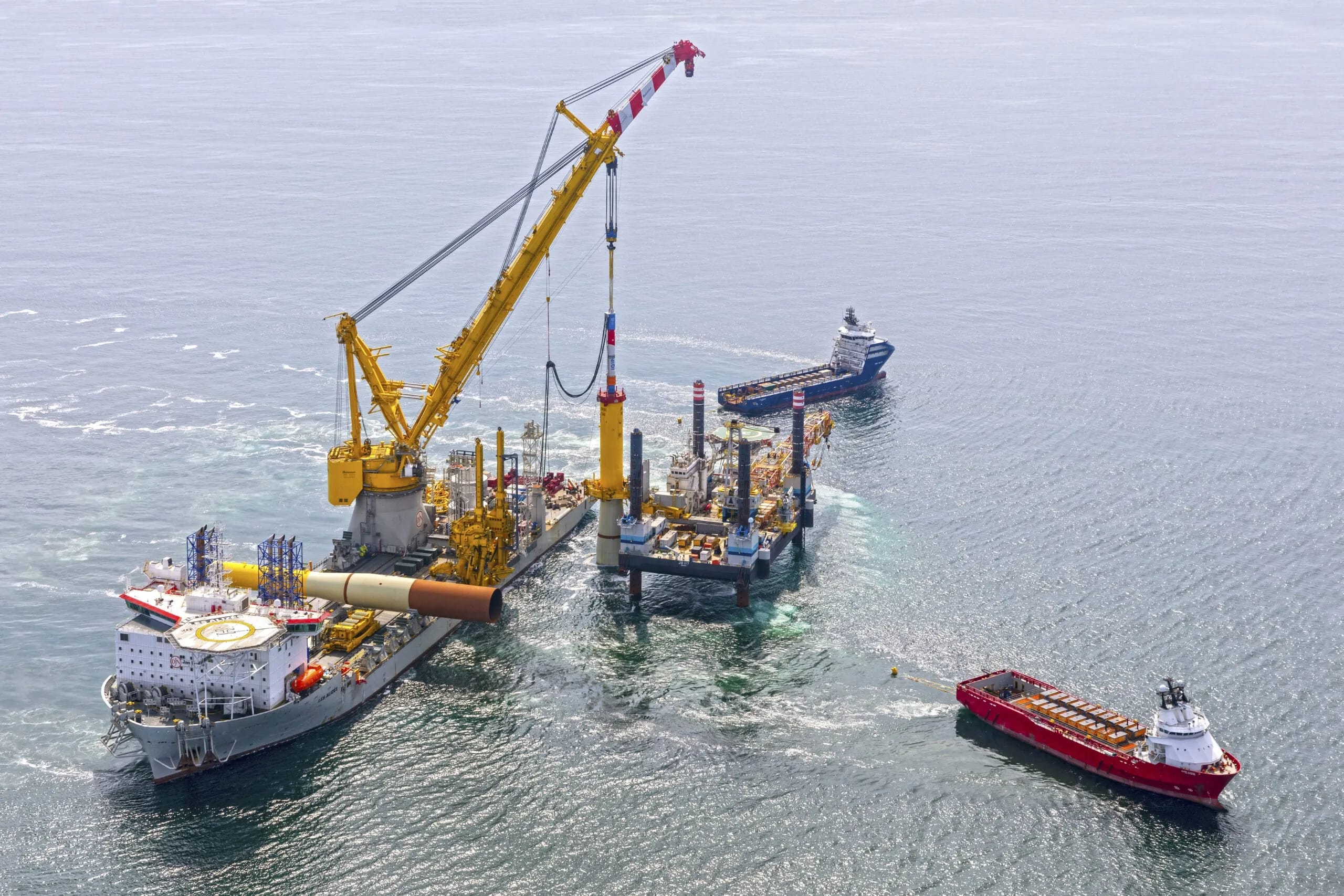
Our client was looking for a solution to both feeder transition pieces (TPs) and if possible, improve the workability for installing TP's onto monopiles, using a floating heavy lift vessel. The TP's had to keep a steady vertical position, as otherwise the TP flange might slip off the guiding pin that ensures the right rotation of the TP. The client was interested in a device that could improve the performance in holding this load still. Seaqualize offered that functionality, on a rental basis, and could combine it with feeder functionality in the same operation.
“Got to be one of the best ideas I´ve ever seen in heavy lifting, as complex as these lifts are” - Client lifting supervisor
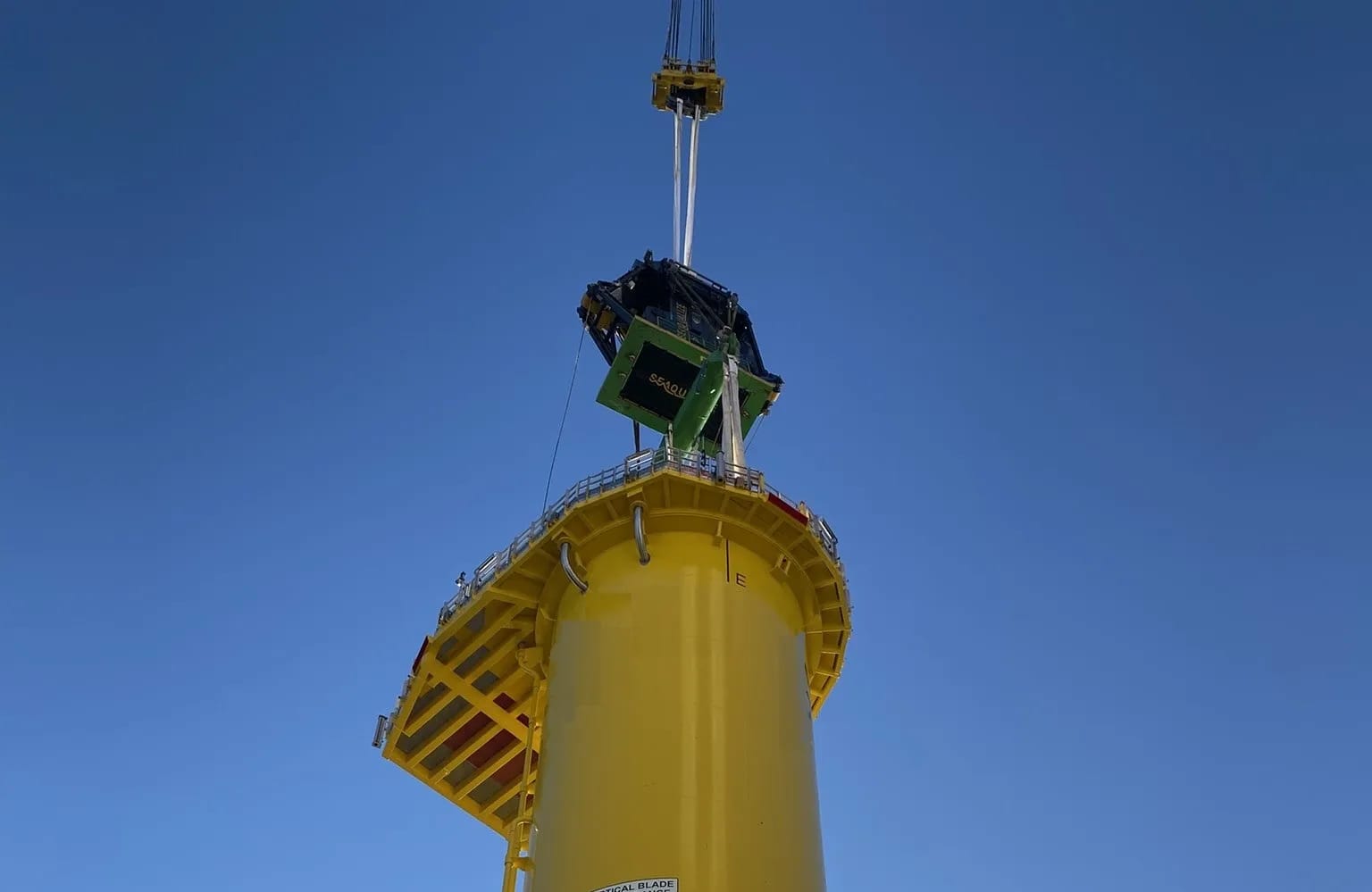
Our Heave Chief 750, was used to install ~600mt TP's for this US project. Based on MRU read outs, we could keep the TP's still to within max. +/-10cm, usually even within +/- 5cm, even in waves of Hs 2.0m. This way, the crew could keep installing, even in winter conditions from November till March. On this project, passive bumpers were used for horizontal alignment, but on future project, the next generation Full-Motion Chiefs by Seaqualize, will be able to dampen XY pendulum swing motions as well, making installation even simpler, safer and quicker.
During the project, we gathered plenty of field data and footage. The below footage and graph shows the performance during two distinct phases where workability is increased:
All these criteria are met: the setdown velocity is reduced to max 7,5 cm/s and the load is always balanced in the tool, so never more contact force than ~0,2G or 0,3G. The motions are kept within the required bandwidth, and once contact is detected, the system automatically keeps contact to make operations safer.
The TP is held still by the Seaqualize HC, to allow the crane operator to focus on horizontal positioning only.
Seastate: Hs1.3m, Tp 10s, Crane tip stroke movement: ~60cm, TP movement max ~10cm
The same absolute performance can be met in higher seastates, with crane tip stroke movements up to 2,5m
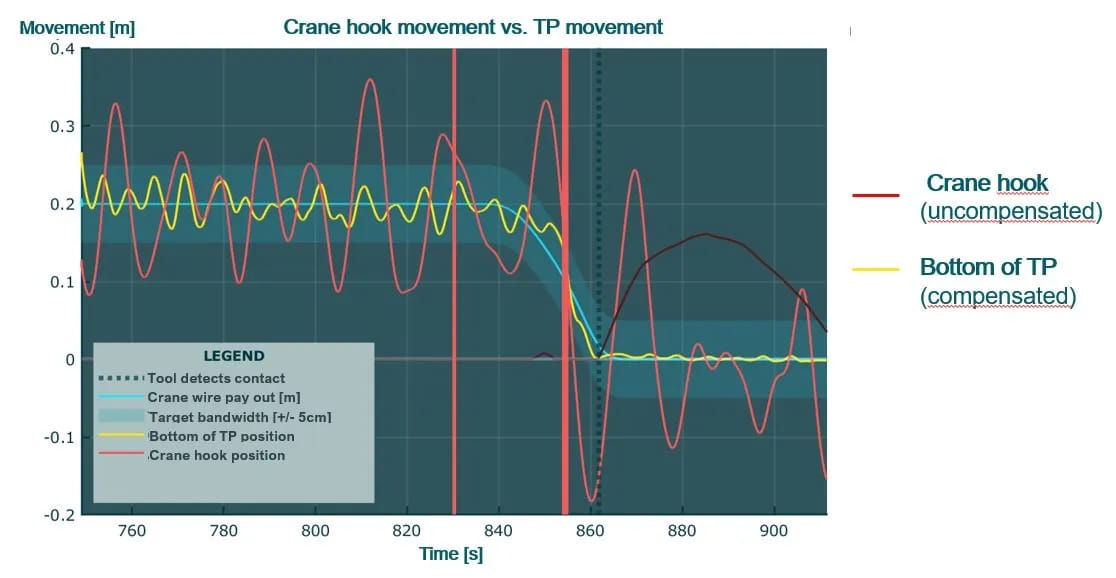
The TP is lowered onto the monopile flange, while the waves acting on the crane tip are compensated
Keeping loads this stable can significantly help workability. With heave control only (as done in this case with the Heave Chiefs), operations in heavy seas already run much smoother.
But what if you add XY control on top, such as in our Full-Motion Chiefs? An example of that control can be seen in our prototype, or in the simulation below.
The FMC offering DP-like control for 3D compensation of your crane hook and load. It offers much higher workability for DP2 self-geared vessels.
Below you'll see the workability gains for a German North sea location, for a wide range of sea states. Depending on the heading, this gain can be almost double.
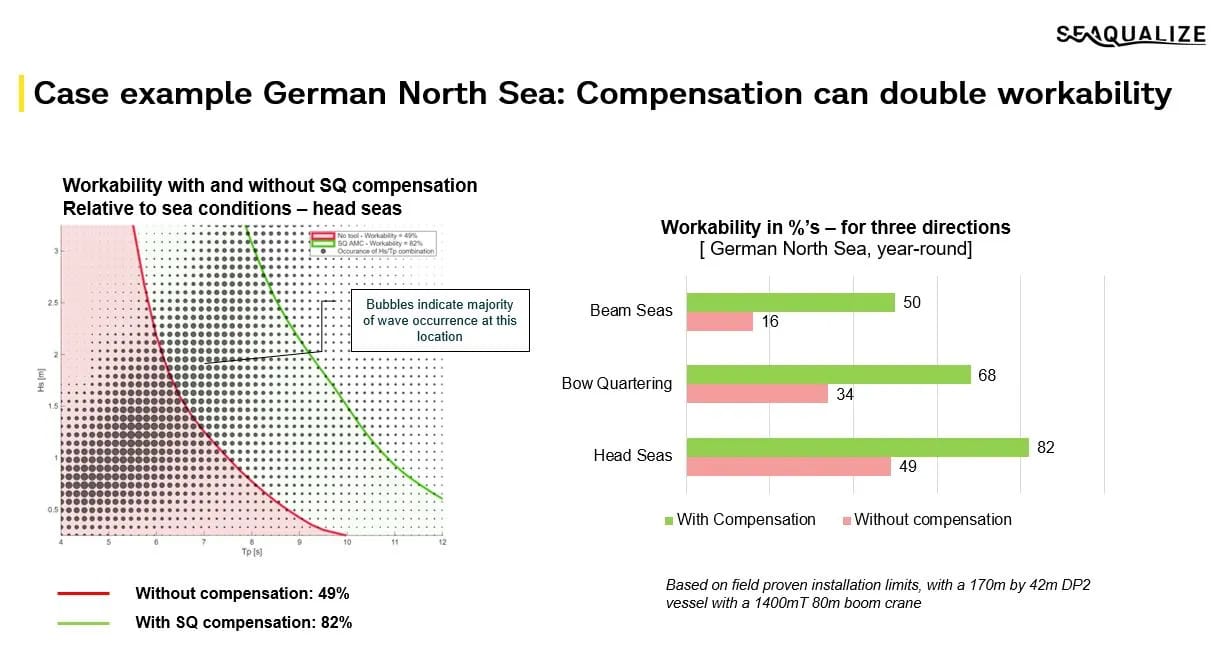
Workability analyses for using full-motion compensation on a 800mT floating installation with a DP2 vessel. Using compensation increases workability upto a factor 2.
Next Case
Dampen out pendulum swings for MPs up to 3000mT