System

Heave compensation explained

Passive, active and balanced heave compensation compared

Lifting offshore means lifting from, or onto, something that moves. Heave compensation keeps the load steady while the vessel or target moves with the waves. Learn the difference between passive, active and balanced heave compensation, and which system fits your operation.

What is heave compensation?

Waves make vessels move in six directions. The vertical motion is called heave. During a lift, heave makes the load move up and down relative to where it needs to go. That causes three problems:

  • Rehits: after lift-off, a heaving deck can hit the load again.
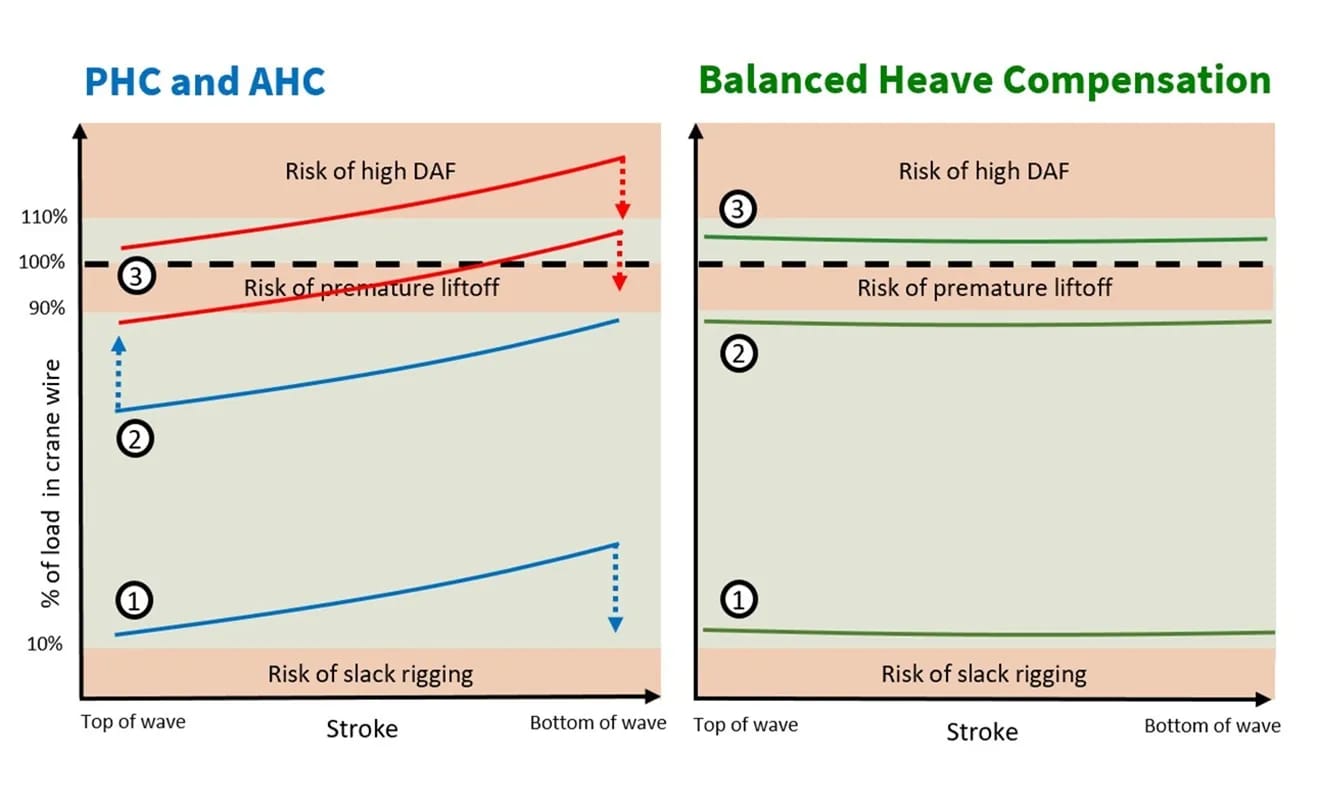
  • Snatch loads: the rigging suddenly goes slack and tight, causing shock loads on the crane (a high dynamic amplification factor, DAF).
  • Hard landings: the load touches down too fast on a deck, a foundation or the seabed.

A heave compensator cancels that vertical motion, so you can lift, land and transfer safely and in rougher weather.

Passive, active or balanced heave compensation?

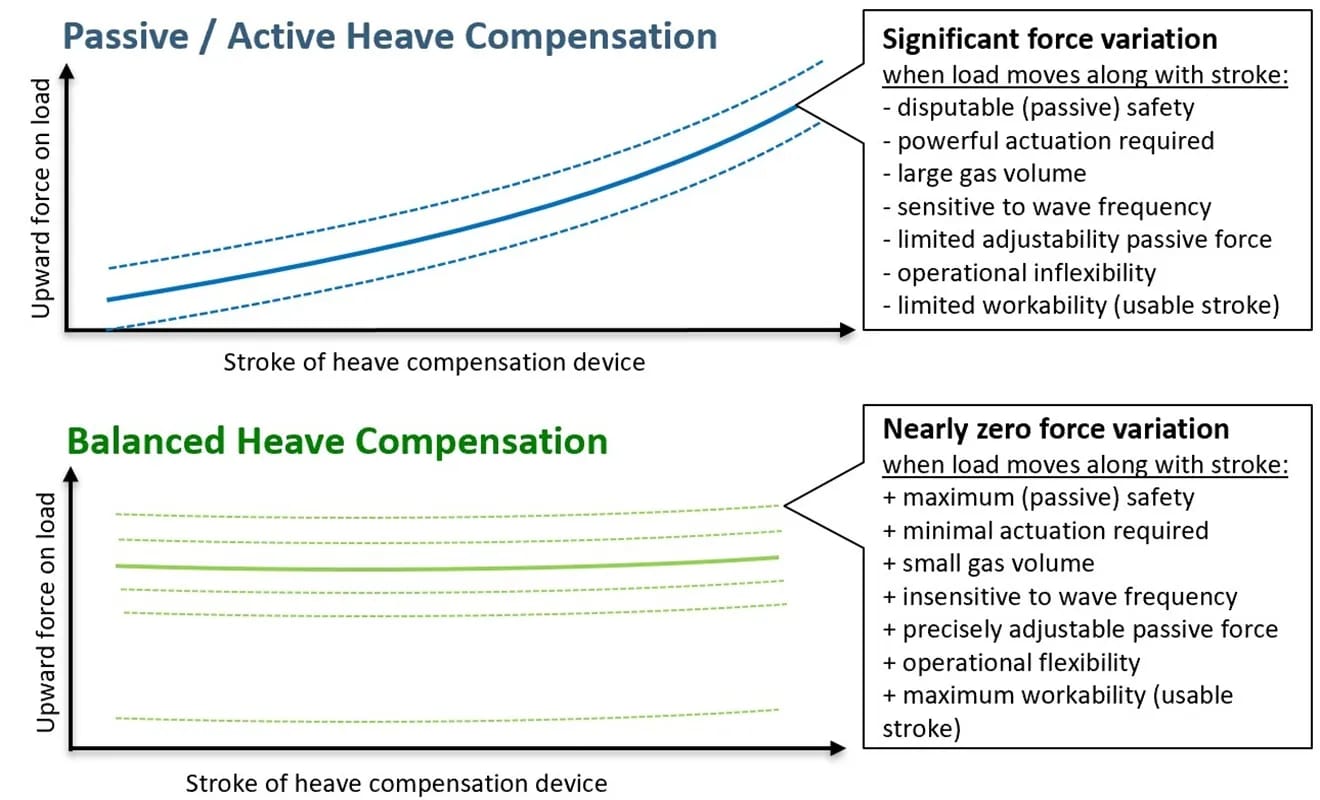
Passive heave compensation (PHC) A gas spring below the hook absorbs part of the motion, without control or energy input. Simple and reliable, but the spring force changes over the stroke, so it never fully cancels the motion, and its behaviour depends on the wave period. More recent passive compensators add active components, but they need large gas volumes and a lot of energy to counteract the differences in spring force.

Active heave compensation (AHC) Conventional AHC systems are built into the vessel and constantly spool heavy winches to keep the load geostationary. They are powerful, but costly, energy-intensive and mostly aimed at subsea operations, and available on only a handful of specialised vessels.

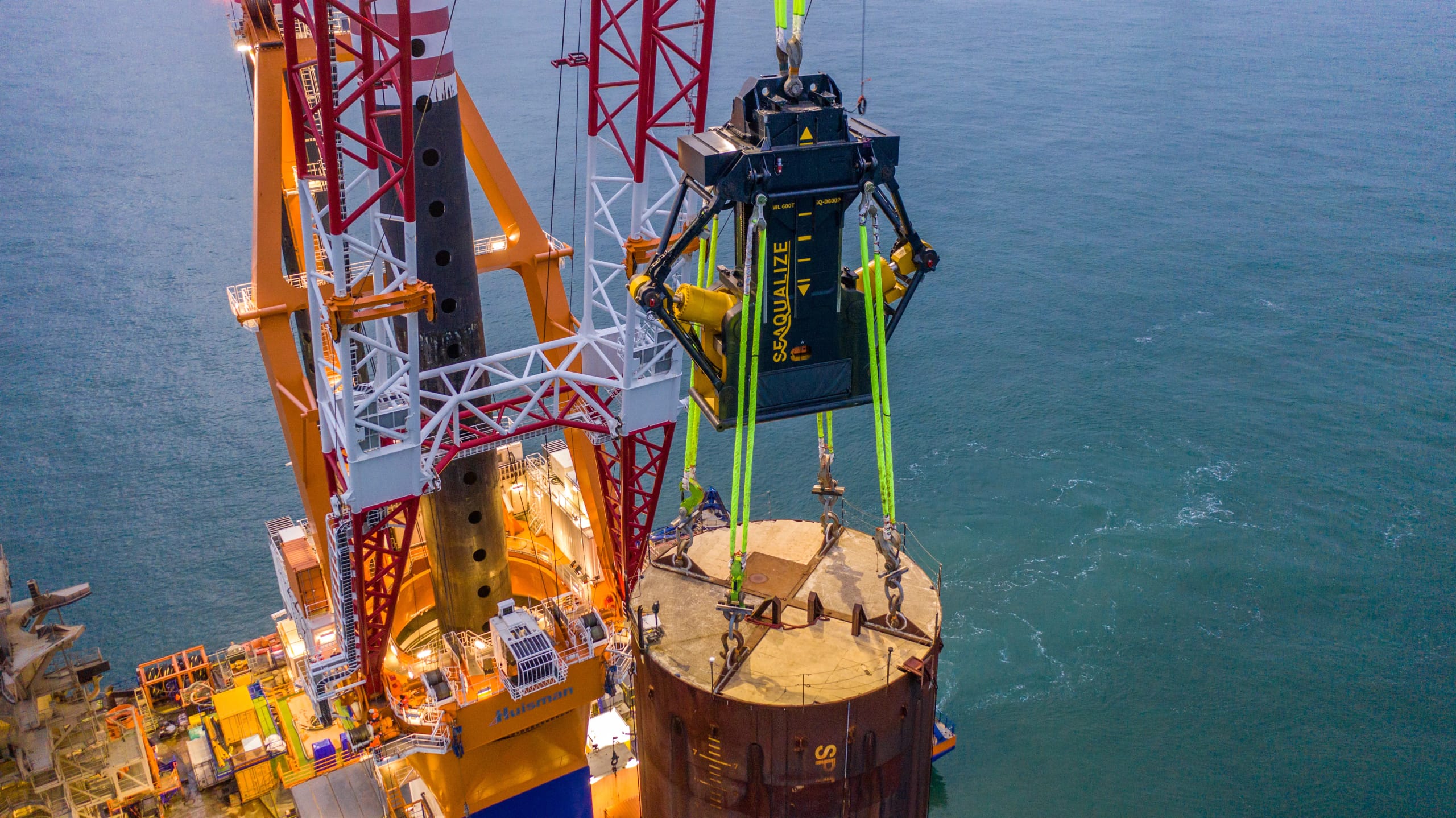
Balanced heave compensation (BHC) Seaqualize's patented technology. Instead of a variable spring force, BHC gives a constant passive force that balances the weight of the load, so it feels nearly weightless. A compact active drive then controls the motion with high precision and speed. The system sits at the hook of any standard crane: no vessel integration, no wire wear, and it can follow a moving target.

Heave compensation compared

Passive (PHC)
Active (AHC)
Balanced (BHC)
Where it sitsBelow the hookWhere it sitsBuilt into the vesselWhere it sitsInline, below the hook of any crane
How it worksGas spring, no controlHow it worksWinch or hydraulic cylinder spools the crane wireHow it worksConstant passive force + active drive
Vessel integration neededNoVessel integration neededYesVessel integration neededNo
Energy useLow; high when active parts are addedEnergy useHighEnergy useLow
Performance across wave periodsDepends on wave periodPerformance across wave periodsIndependentPerformance across wave periodsIndependent
Wire wearNoWire wearYes, constant spoolingWire wearNo
Can follow a moving targetNoCan follow a moving targetLimited: too slowCan follow a moving targetYes (follow mode)

How balanced heave compensation works

By combining springs with arm systems, we balance the weight of heavy loads, so we can move them effortlessly with the sea.

Conventional passive and active heave compensators put a variable passive force on the load. Our patented Balanced Heave Compensation provides a constant passive force instead. That enables active control with unmatched precision, speed and safety.

Balanced Heave Compensation makes loads feel nearly weightless, so transfer systems can handle them gently, without fighting their full weight or large spring forces.

Our system sits at the hook, measures motion where it matters, and balances the load itself, not the whole crane. That gives higher accuracy, no wire wear, and enables transfer lifts between moving vessels. Unlike AHC, it provides true 3D compensation, works modularly without vessel integration, and avoids the high CAPEX of built-in systems.
Key benefits

  • Passive safety with active control: rigging can be hooked up safely and premature lift-offs are avoided.
  • Low dynamic loads: a dynamic amplification factor (DAF) of 1.05 or even lower can be guaranteed.
  • Compact and scalable: small gas volumes and actuation packages allow fast deployment below the hook, scaling up to ultra-heavy loads of 5000 mT and above.
  • Any sea state: indifferent to wave frequency, so any sea state can be Seaqualized, anywhere in the world.

Watch the explainer

Which Seaqualize system fits your operation?

  • Heave Chief: active heave compensation below the hook. For quick lifts from heaving feeder barges and keeping loads still in a floating crane hook. HC750 and HC1100, DAF 1.05.
  • Full-Motion Chief: active compensation in heave, surge and sway. For floating installation and ship-to-ship transfers where horizontal motion and pendulum swing matter too. From 100 to 3000 mT.
  • Reef Chief: passive heave compensation for subsea lifts. Balanced, so it performs consistently across wave periods without tuning. From the splash zone to touchdown on the seabed, up to 1000 m depth.

Not sure which fits? Contact us and we'll analyse your lift.

Frequently asked questions

What is a heave compensator? A heave compensator is a device that cancels the vertical motion (heave) of a vessel or load caused by waves. It keeps a crane load steady relative to a fixed or moving target, so you can lift, land and transfer safely offshore.

What is the difference between active and passive heave compensation? Passive heave compensation uses a spring, usually gas, to absorb motion without control or energy input. It reduces motion but does not cancel it, and its performance depends on the wave period. Active heave compensation uses sensors and a powered drive to cancel the motion, but conventional systems are large, energy-intensive and built into the vessel. Balanced heave compensation combines both: a constant passive force carries the load, and a compact active drive controls it.

Is heave compensation built into the crane or added below the hook? Both exist. Conventional active systems are built into the vessel's crane or winch. Seaqualize's systems hang inline below the hook of a standard crane, on a jack-up or a floating vessel, without changes to the crane or vessel.

What is the dynamic amplification factor (DAF)? The DAF is the ratio between the peak force on the crane during a lift and the static weight of the load. A DAF of 1.1 means the crane briefly carries 10% more than the load's weight. Our systems keep the DAF below 1.1, down to 1.05.

What is the difference between heave compensation and motion compensation? Heave compensation cancels vertical motion only. Motion compensation can also cover horizontal motions such as surge and sway. The Full-Motion Chief does both.

See heave compensation at work